
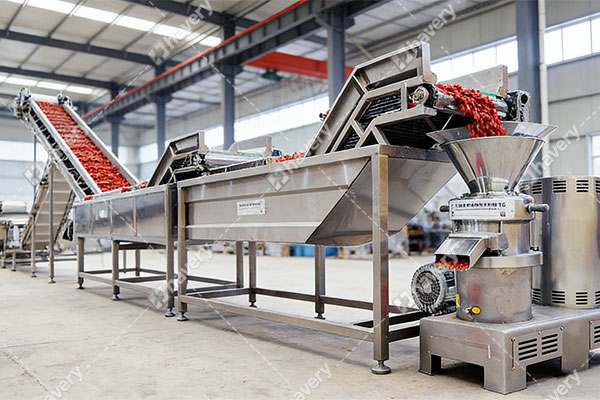
The global demand for chili-based condiments continues to rise, making the chili sauce production line an essential investment for food processing businesses. Understanding the chilli sauce production process is crucial for manufacturers aiming to achieve consistent quality, كفاءة عالية, and food safety standards. This article provides a professional overview of how a modern chili sauce production line works from raw material handling to final packaging.
Raw Material Selection and Preparation
The chilli sauce production process begins with the careful selection of fresh or dried chili peppers. High-quality raw materials directly impact the flavor, color, and pungency of the final product. In a standard chili sauce production line, chilies are first sorted to remove impurities such as stems, الحجارة, and damaged peppers.
After sorting, the chilies undergo washing using bubble washing systems or spray cleaning equipment. This step ensures hygiene and removes surface contaminants. A well-designed chili sauce production line integrates automatic washing systems to improve efficiency and reduce labor costs.
Crushing and Grinding Process
Once cleaned, the chilies are conveyed into crushing machines for coarse size reduction. This is followed by fine grinding to achieve the desired paste consistency. The grinding stage is a critical part of the chili sauce production line, as it determines the texture and uniformity of the sauce.
Advanced grinders used in a chili sauce production line are typically made of stainless steel and designed to handle high-moisture materials. They ensure minimal heat generation, preserving the natural color and flavor of the chili paste.
Mixing and Cooking
After grinding, the chili paste is transferred to mixing and cooking tanks. Ingredients such as garlic, sugar, salt, vinegar, and stabilizers are added according to the recipe. In a fully automated chili sauce production line, this process is controlled by precise dosing systems.
Cooking is essential to develop flavor and extend shelf life. The chili sauce production line often includes steam-jacketed kettles or continuous cooking systems that maintain uniform temperature and prevent burning. Proper cooking also helps achieve the desired viscosity and microbial safety.
Homogenization and Sterilization
To ensure a smooth and stable product, the sauce may undergo homogenization. This step improves texture and prevents ingredient separation. In a modern chili sauce production line, homogenizers are integrated inline for continuous processing.
Sterilization is another key stage. High-temperature sterilization systems in the chili sauce production line eliminate harmful microorganisms, ensuring food safety and compliance with international standards.
Filling and Packaging
The final stage of the chilli sauce production process is filling and packaging. The sauce is transferred to automatic filling machines, where it is packed into bottles, pouches, or jars. A complete chili sauce production line includes capping, labeling, and date printing systems to streamline production.
Packaging plays a vital role in preserving product quality and enhancing brand appeal. Therefore, a reliable chili sauce production line ensures accurate filling volumes and hygienic handling throughout the process.
Here is the hot chili sauce production line youtube video testing in our factory for your reference!!
Chili Sauce Production Line Advantages
Investing in an automated chili sauce production line offers several benefits:
- Improved production efficiency and output capacity
- Consistent product quality and taste
- Reduced labor costs and manual errors
- Enhanced food safety and hygiene standards
A well-configured chili sauce production line can be customized based on production scale, from small workshops to large industrial plants.
Conclusion
The chilli sauce production process involves multiple stages, each contributing to the final product’s quality and consistency. From raw material preparation to packaging, every step is optimized within a modern chili sauce production line. For manufacturers looking to expand their business in the condiment industry, investing in a high-efficiency chili sauce production line is a strategic move to ensure competitiveness and long-term success.