
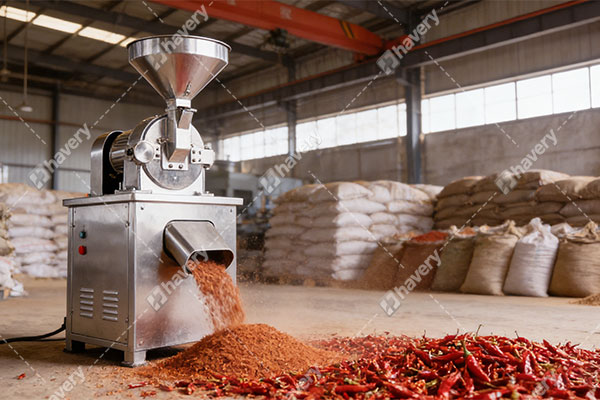
The global demand for high-quality spices is surging, and at the heart of this industry lies a sophisticated chilli powder production line. For manufacturers, understanding the technical chilli powder making process is the difference between a premium, vibrant product and a low-grade, contaminated batch.
Whether you are scaling up a local spice business or investing in a new factory, here is the professional breakdown of how a modern chilli powder production line operates to ensure maximum flavor retention and food safety.
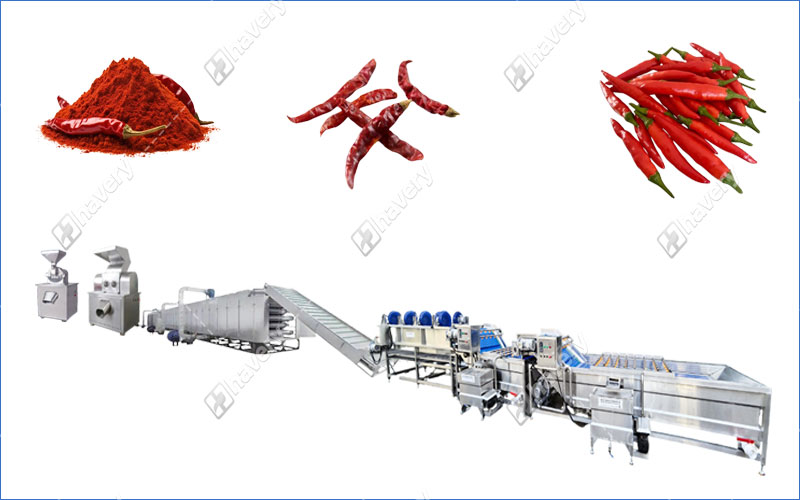
1. Pre-Processing: Cleaning and De-stoning
The first stage of any chilli powder production line is removing impurities. Raw dried chillies often arrive with dust, stones, and metal fragments from the drying floor.
- Dry Cleaning: A specialized vibration screen and air blower remove light debris.
- De-stoning: High-efficiency gravity de-stoners separate stones from the peppers, protecting the expensive grinding teeth of the chilli powder production line from damage.
2. Stem Removal (Decalyxing)
For premium “stemless” powder, the green calyx must be removed. A high-end chilli powder production line incorporates a dedicated chilli de-stemming machine. This machine uses rotating blades to trim the stems, ensuring the final powder has a deeper red color and a higher value on the international market.
3. Drying and Moisture Control
Even “dried” chillies often have inconsistent moisture levels. Before entering the grinding stage of the chilli powder production line, the peppers must reach a uniform moisture content (usually below 10%).
- Continuous Belt Dryers: These ensure the chillies are crisp enough to shatter upon impact, which is vital for the efficiency of the chilli powder production line.
4. Coarse Crushing (The Primary Stage)
You cannot go from whole pepper to fine powder in one step without overheating the product. A professional chilli powder production line uses a “crusher” to break the pods into small flakes (3-5mm). This prevents the loss of volatile oils (capsaicin) that give the chilli its heat and aroma.
5. Fine Grinding and Temperature Management
This is the most critical phase of the chilli powder production line.
Technical Insight: Most standard grinders generate excessive heat. A professional chilli powder production line utilizes a Water-Cooled Universal Grinder or a Cryogenic Pulverizer.
By circulating cold water around the grinding chamber, the chilli powder production line keeps the temperature low, preserving the “ASTA color value” and preventing the oils from turning the powder into a sticky paste.
6. Fine Dust Collection and Sifting
Industrial hygiene is paramount. A modern chilli powder production line is equipped with a pulse dust collector. This system creates a negative pressure environment, ensuring no spicy dust escapes into the factory air, protecting workers’ health.
The powder then passes through a rotary vibration sieve. Only the particles that meet the mesh requirement (e.g., 60-100 mesh) proceed, while larger particles are cycled back into the chilli powder production line for re-grinding.
7. Automated Packaging and Metal Detection
The final step of the chilli powder production line is packaging.
- Auger Filling: Precision screw feeders ensure that every bag contains the exact weight.
- Metal Detection: Before boxing, every bag passes through a metal detector to ensure no fragments from the chilli powder production line have entered the food chain, meeting ISO and HACCP standards.
Why the Right Chilli Powder Production Line Matters
Investing in a turnkey chilli powder production line reduces labor costs by up to 60% compared to semi-automated setups. More importantly, it ensures a standardized product that can pass strict export inspections for the EU or US markets.
Every stage of the chilli powder making process must be synchronized. A bottleneck in the drying stage will slow down the entire chilli powder production line, leading to decreased ROI.